The first ever survey into diversity in the Australian clean energy sector.
Share this report
28 Oct 2021
Empowering Everyone: Diversity in the Australian Clean Energy Sector provides a comprehensive snapshot of the professional and social identities that make up the Australian clean energy workforce.
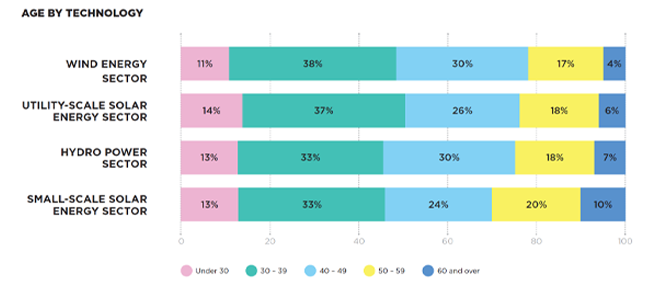
Covering categories such as education, cultural background, age, sexuality and disability, the report will allow the industry to identify where systemic barriers and inequities may exist so that we can develop strategies to create a more inclusive and equitable clean energy sector.
Diversity brings balance and a range of viewpoints that, while sometimes challenging, only serves to make up better people and to build a stronger and more relevant business.
Survey respondent
Key findings
Larger organisations dominate the utility-scale renewable energy sector, with almost 50 per cent of the workforce employed by an organisation with more than 200 employees.
Women make up 39 per cent of the Australian clean energy workforce. While this is less than the total Australian workforce, it is better than the average for the global renewable energy industry.
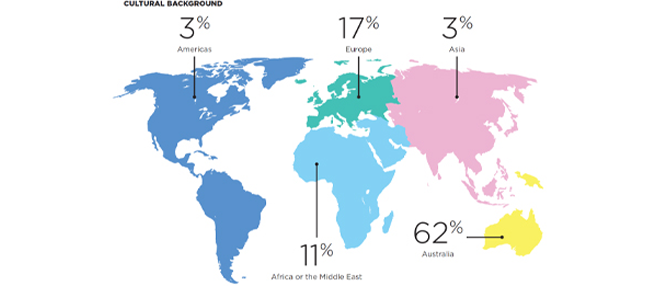
68 per cent of the Australian clean energy workforce was born in Australia, which is similar to the entire Australian population. The 30–40 age group is the most diverse, while the over 60 category is the least diverse.
Almost 20 per cent of employees have experienced disadvantage at work due to their diversity.
The Clean Energy Council (CEC) has warned the Victorian Labor Government’s decision to abandon the Central North Renewable Energy Zone (REZ) creates further uncertainty over how the state will replace its ageing coal-fired power stations.
Clean Energy Council appoints new Board Directors to strengthen representation
The Clean Energy Council is pleased to share the appointment of two new Directors to the Board: Will Hall, Managing Director of Sigenergy Australia & New Zealand, and Brent Finlay, Managing Director of Finlay Agricultural Industries.
The opening of Australia’s first offshore wind auction marks a watershed moment for Victoria’s energy system, unlocking one of the nation’s richest renewable energy resources, anchoring jobs and investment in regions like Gippsland, and delivering energy reliability for generations to come.
Renewables are delivering real benefits in Central West NSW
Discover what's happening on the ground in the Central-West Orana Renewable Energy Zone in NSW, one of the regions building the wind, solar, battery and transmission projects that will power Australia's future.
Investment certainty greatly improved following Capital Gains Tax agreement in the Senate
Australia’s peak industry body for the clean energy industry has welcomed Treasurer Chalmers' announcement today to provide long term certainty for investors committed to Australia’s future energy needs.
Coalition VNI West decision puts Victoria's energy security at risk
The Victorian Coalition’s decision to scrap the VNI West transmission link if elected is a direct threat to Victoria’s energy security, leaving the state with fewer options to keep electricity flowing to Victorian families and businesses.