News and resources
Bi-annual investment report: Large-scale renewable generation and storage, H1 2026
Our bi-annual report on Australia’s large-scale renewable generation and storage investment
Renewable energy investment delivers strong results in the first half of 2026
Australia’s renewable energy investment performed exceptionally well in a tough economic environment in the first half of 2026.
Our latest report shows more new generation capacity reached financial close, and more large-scale battery storage was switched on, in six months than across the whole of 2025.
Investment is moving from pipeline to power
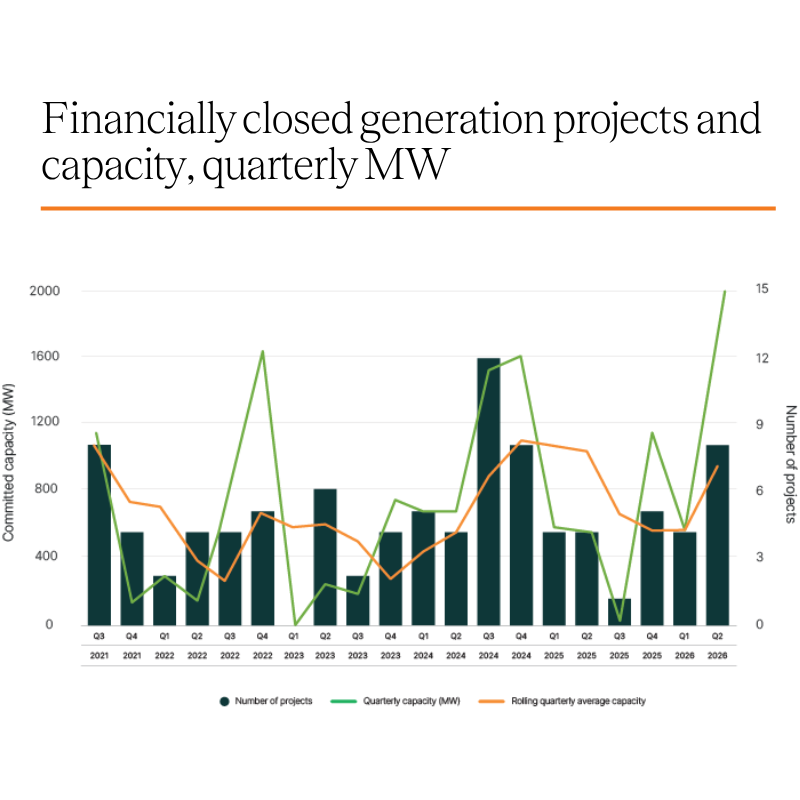
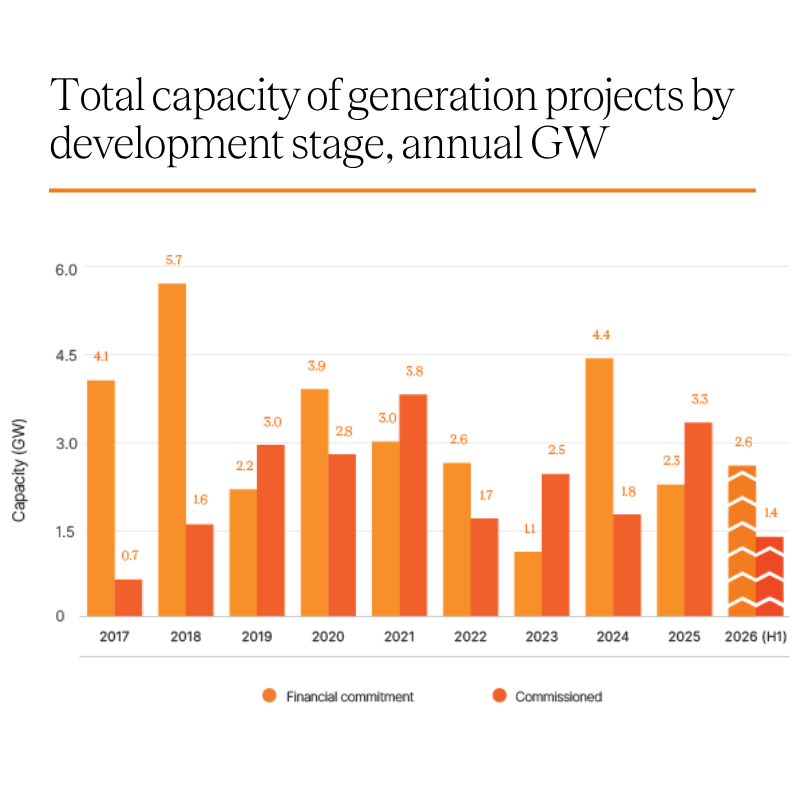
Twelve projects totalling 2.6 GW secured financing, compared with 2.3 GW across the previous year. Solar and solar hybrid projects led the result, accounting for 11 of the 12 projects.
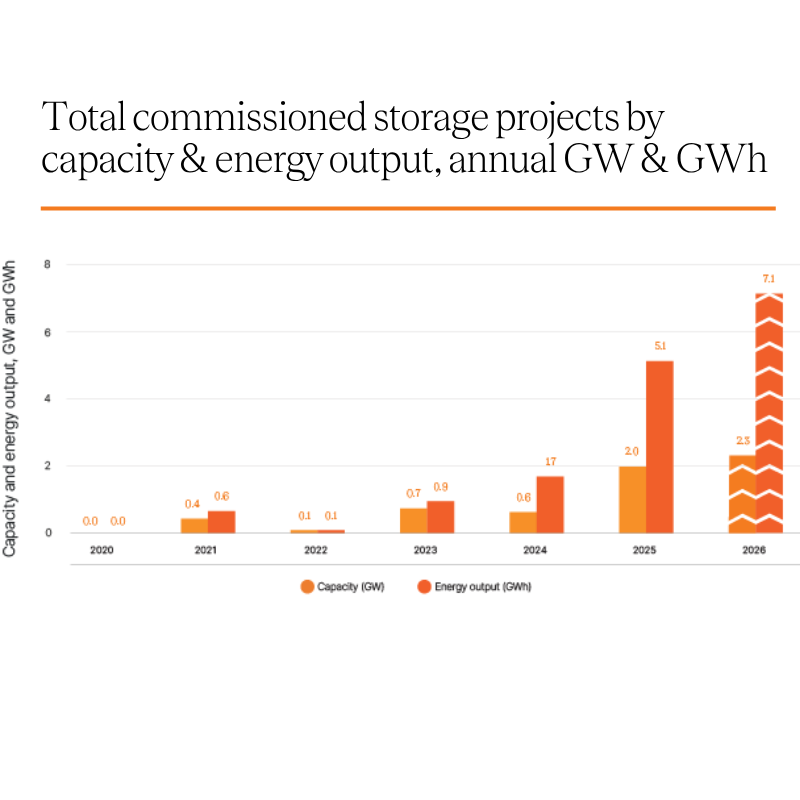
Nine large battery projects worth $4.3 billion were switched on, adding 2.3 GW / 7.1 GWh of storage capacity / energy output, already more than the 2 GW / 5.1 GWh added across all of 2025.
Five generation projects representing 1.4 GW and more than $2.8 billion of investment began operating, led by the first stage of Golden Plains Wind Farm in Victoria.
Australian-made energy strengthens energy security
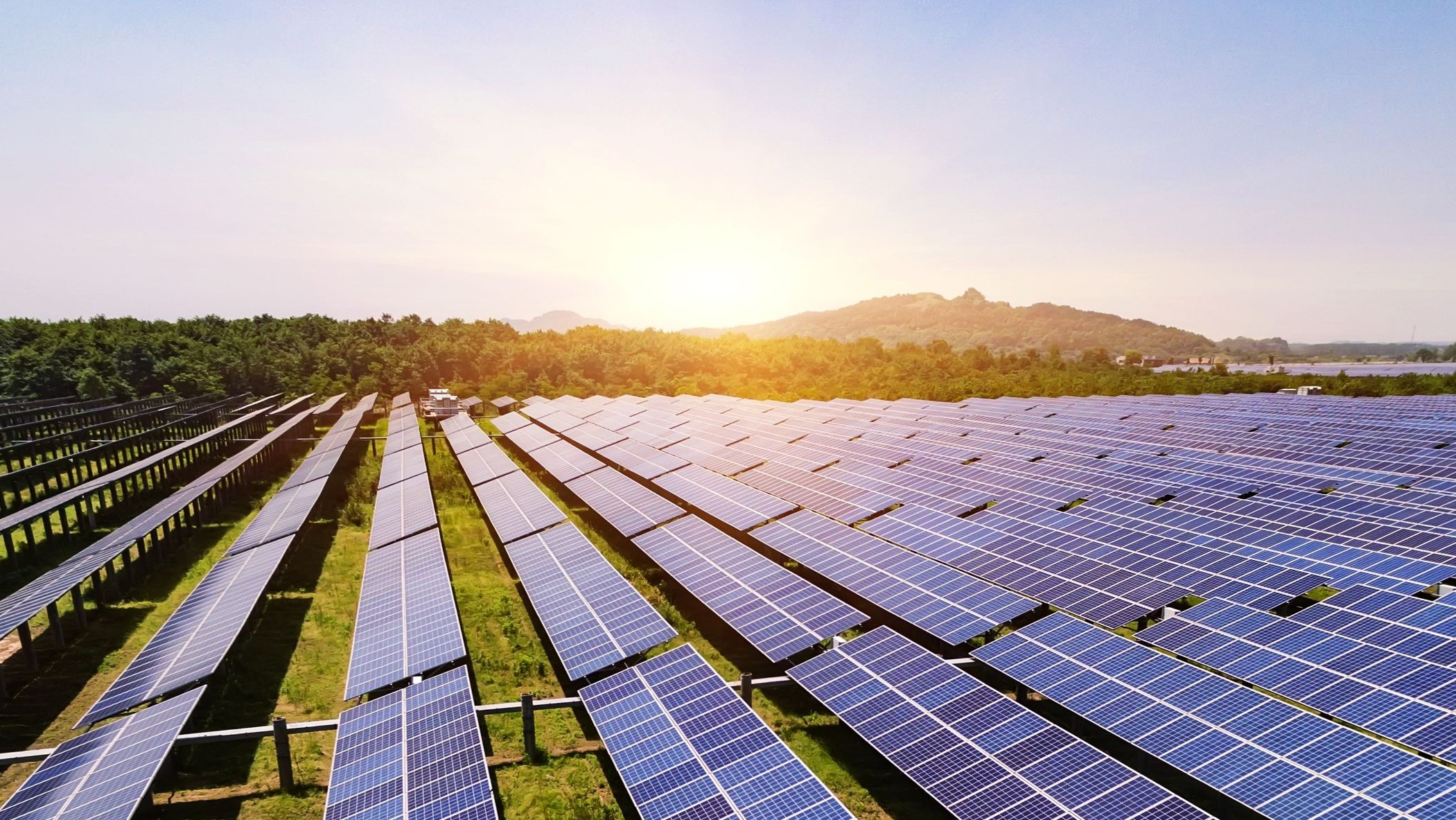
Australian sun and wind don’t rely on purchased fuel to generate electricity.
Every new solar farm, wind farm and battery makes Australia more energy independent, helping shield homes, businesses and industries from global fuel-price spikes and supply disruptions.
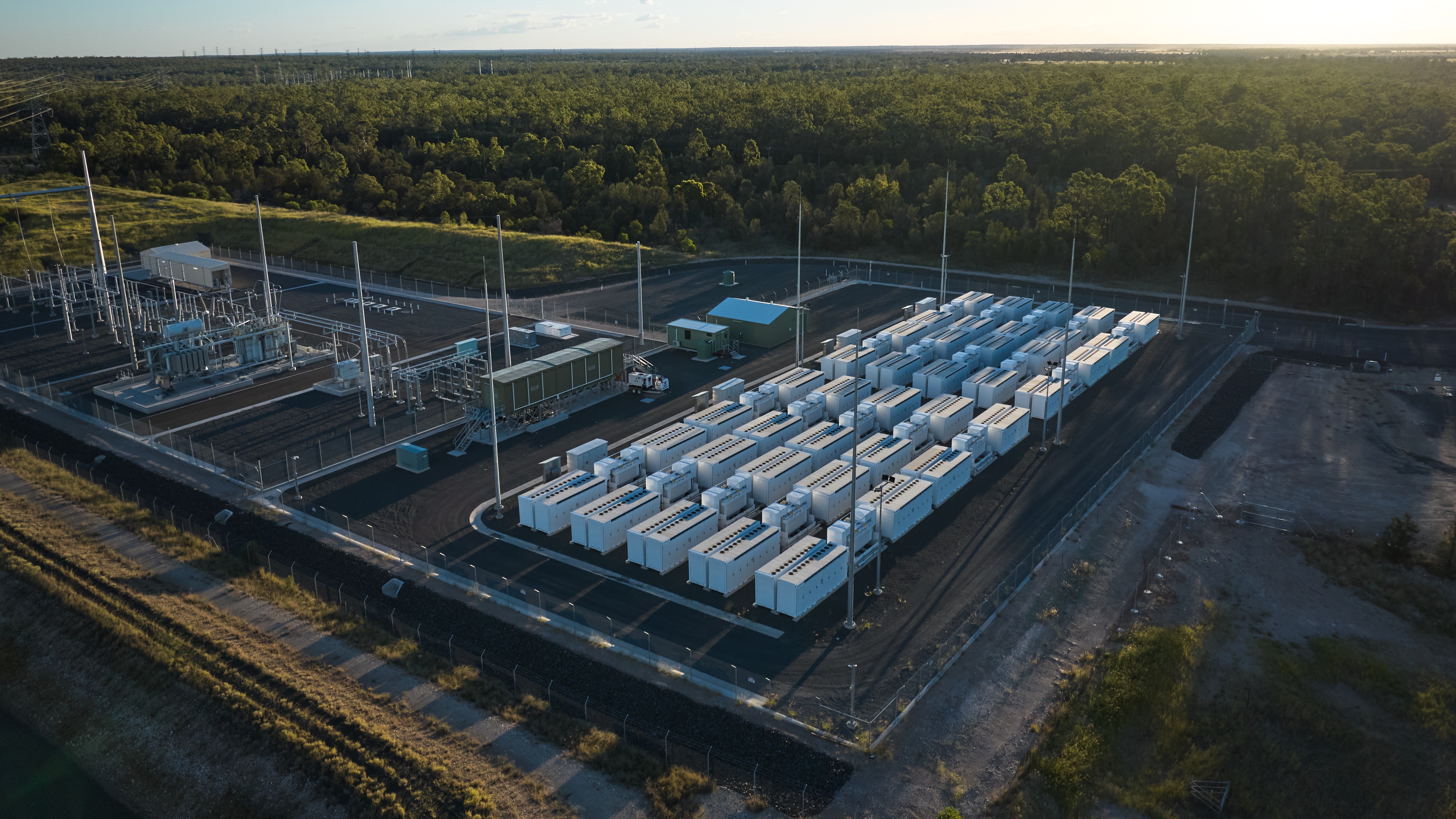
Large-scale batteries capture surplus electricity during the day and release it during the evening peak. This helps Australia get more out of its renewable generation and supports a reliable electricity system.
Wholesale electricity prices averaged $74 per megawatt-hour in the June quarter, down 47 per cent on a year earlier. While wholesale costs are only one part of a power bill and network costs continue to rise in some regions, more renewables and storage are putting downward pressure on electricity prices.
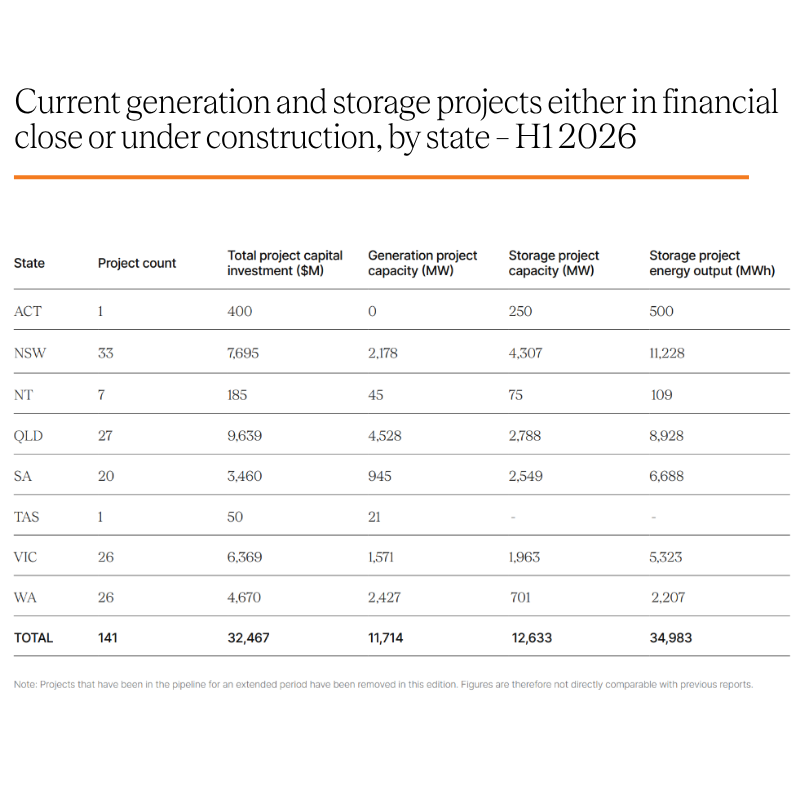
141 renewable generation and storage projects worth around $32.5 billion are currently at financial close or under construction. Queensland leads on investment ($9.6 billion) and generation capacity (4.5 GW), while NSW has the largest battery storage pipeline (4.3 GW / 11.2 GWh).
These results demonstrate industry resilience and growth in the face of difficult headwinds.
Maintaining momentum requires predictable approvals, timely transmission and long-term revenue certainty to help more projects, including onshore wind, progress into operation.
Australian-made clean energy will not only deliver more affordable, reliable electricity for households and businesses, but also tens of thousands of jobs and billions of dollars in investment and economic activity, particularly in regional Australia.Jackie Trad Clean Energy Council CEO
Bi-annual investment report: Large-scale renewable generation and storage, H1 2026
In the news
Latest news
Read the latest updates from the Clean Energy Council and across the industry.