The first ever survey into diversity in the Australian clean energy sector.
Share this report
28 Oct 2021
Empowering Everyone: Diversity in the Australian Clean Energy Sector provides a comprehensive snapshot of the professional and social identities that make up the Australian clean energy workforce.
Covering categories such as education, cultural background, age, sexuality and disability, the report will allow the industry to identify where systemic barriers and inequities may exist so that we can develop strategies to create a more inclusive and equitable clean energy sector.
Diversity brings balance and a range of viewpoints that, while sometimes challenging, only serves to make up better people and to build a stronger and more relevant business.
Survey respondent
Key findings
Larger organisations dominate the utility-scale renewable energy sector, with almost 50 per cent of the workforce employed by an organisation with more than 200 employees.
Women make up 39 per cent of the Australian clean energy workforce. While this is less than the total Australian workforce, it is better than the average for the global renewable energy industry.
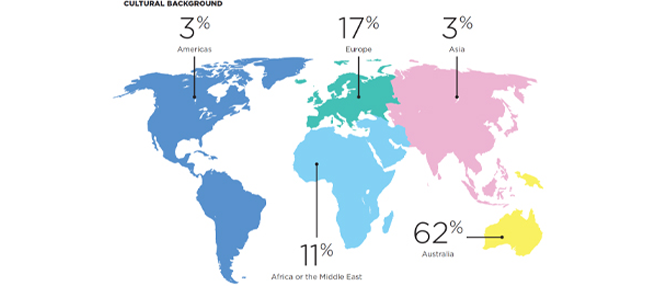
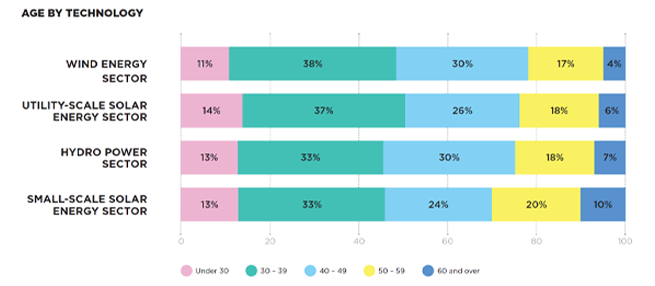
68 per cent of the Australian clean energy workforce was born in Australia, which is similar to the entire Australian population. The 30–40 age group is the most diverse, while the over 60 category is the least diverse.
Almost 20 per cent of employees have experienced disadvantage at work due to their diversity.
Submission to ASL on the Firming LTESA Consultation Paper
Our submission highlights opportunities for a clearer service-based definition, genuine technology neutrality, greater modelling transparency, careful consideration of gas availability and development and fuel risks.
Submission to the Queensland Treasury on the draft Code of Conduct for Renewable Energy Developers
Our submission supports the objective of ensuring high social license standards in the draft Code but highlights two structural structural issues which must be addressed to ensure additional costs are not added to electricity generation without additional community benefit.
Submission on CFA's draft Design Guidelines for Renewable Energy Facilities v5
Our submission proposes fire safety requirements should be proportionate to the actual, quantified risk presented, supported by transparent evidence, and consistent with how comparable risks are managed across other industries and land uses. We welcome the opportunity to keep working collaboratively with CFA.
Submission to VicGrid on Victoria's transmission pricing framework
In our submission, we support making charges more cost reflective but urge a cautious and proportionate approach, because broad peak and off-peak pricing risks raising costs without improving network use.