The Clean Energy Council today released a new report underscoring the momentum of the clean energy industry as it adapts to new challenges and invests for the future.
Based on an extensive survey of industry insiders, the Renewable Energy Risk and Insurance Index, shows the increased scale and maturity of Australia's clean energy industry, with more organisations operating across different technologies and jurisdictions and delivering more complex projects.
Battery storage is a clear example how the industry is evolving, with more than 85 per cent of respondents now involved in battery storage projects.
The changing nature of the industry brings new challenges though, and the report highlights the need for nationally consistent approaches to state-level approval timings, expanding grid infrastructure, building workforce capacity and engaging communities.
Developed in partnership with Lockton, the world’s largest privately owned insurance brokerage, the Index received 213 responses from developers, investors, operators and financiers, of which 146 met the inclusion criteria and formed the basis for the analysis, including 102 completed surveys, to establish a new benchmark of the risks affecting Australia’s clean energy sector and pathways to mitigate and resolve these.
The recommendations contained in the report include:
- Clearer, faster approval pathways including bilateral agreements between governments, risk-based conditions, and better-resourced assessment agencies, without lowering environmental standards.
- Clearer national guidance on benefit-sharing with local communities, to build genuine and consistent community partnerships during project development.
- Faster rollout of Renewable Energy Zones (REZs) and transmission projects, as well as continued reform through initiatives such as the joint Australian Energy Market Operator (AEMO)/CEC Connections Reform Initiative (CRI).
- Ongoing refinements to policy settings, including energy market rules, Capacity Investment Scheme (CIS) tenders and the Safeguard Mechanism, to give investors certainty, and reduce risk premiums and costs that ultimately get passed to consumers.
CEC Chief Executive, Jackie Trad, said the findings from the survey reflect an increasingly complex operating environment for Australia's renewable energy sector, at a time when the country needs to accelerate investment to meet growing demand and maintain energy security.
"The message from industry is clear: certainty attracts investment, jobs and opportunity, and uncertainty slows these down," Ms Trad said.
“With electricity demand growing and racing against the impending closure of Australia’s ageing and unreliable coal-fired power stations, the focus should be on removing barriers to investment and project delivery to the greatest extent possible, and to a high standard.
The message from industry is clear: certainty attracts investment, jobs and opportunity, and uncertainty slows these down.Jackie Trad Clean Energy Council CEO
In 2026, Queensland has reached the first financial close for an onshore wind project for the year, Victoria has commenced Australia's first offshore wind auction, and New South Wales has progressed reforms to modernise planning and approvals processes.
Ms Trad said these developments demonstrate positive momentum building across aspects of Australia's energy transition, but noted that providing investors with the certainty needed to commit capital and deliver projects remains key.
"We've seen encouraging steps from states and territories to improve planning and approvals processes without compromising environmental standards, while work to reform national environmental laws is also moving in the right direction,” Ms Trad said.
“Work also continues between industry and governments on progressing several of the foundations for the proposals outlined in this report, including reform to grid connections processes and energy market rule changes among other initiatives.
“Giving industry the confidence to deliver the projects that will power Australia's future must remain a top priority,” she said.
“The findings show that many of the sector’s most significant challenges are increasingly interconnected, from grid constraints and workforce pressures to community expectations and market uncertainty,” said Marcus Pearson, CEO, Lockton Pacific.
“Insurance remains an important tool, but managing risk in today’s environment also requires strong project governance, workforce planning, stakeholder engagement and informed decision-making across the asset lifecycle. This Index gives industry a valuable baseline to understand where risks are intensifying and where stronger responses are needed,” he said.
ENDS
For more information or to arrange an interview, please contact:
Liam Straughan
Clean Energy Council Media Officer
+61 409 470 683
Latest news
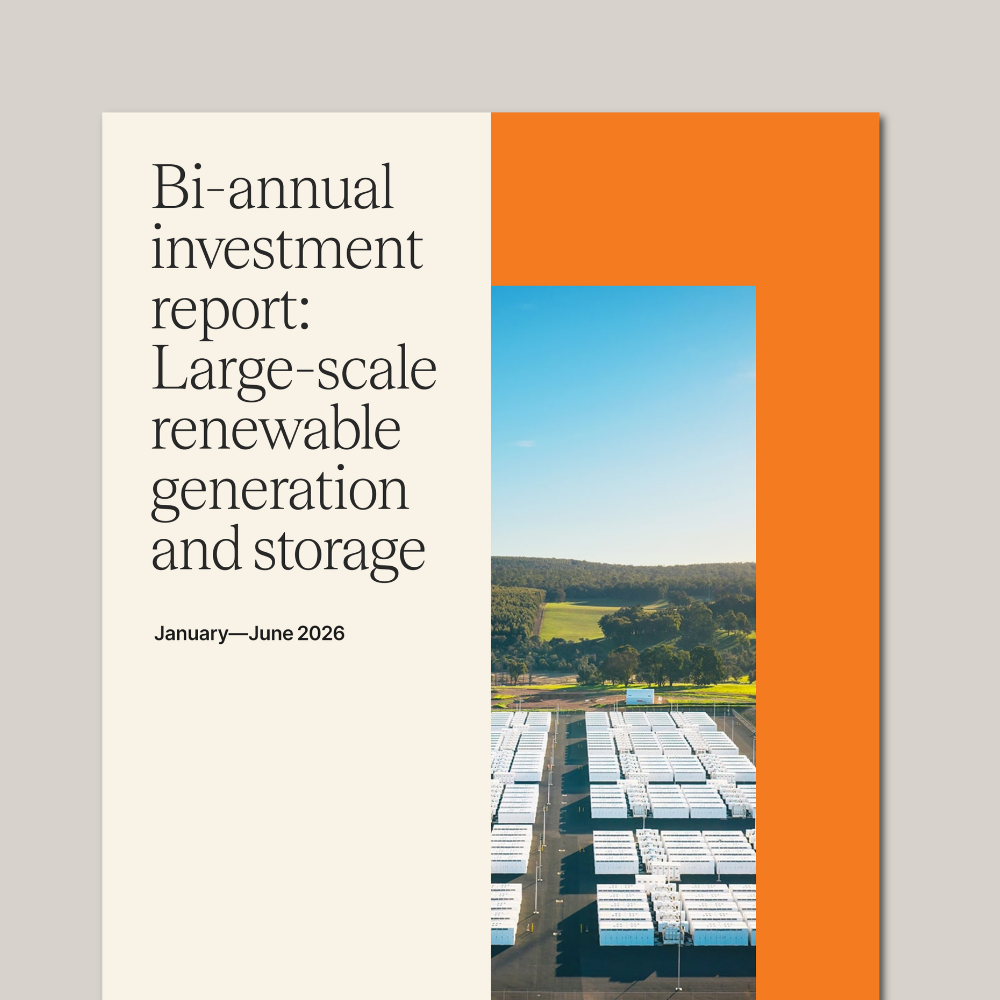
Bi-annual investment report: Large-scale renewable generation and storage, H1 2026

Clean energy investment surges, Australian energy security strengthens

Submission on AEMO's Market Visibility Framework consultation paper

Op-ed: If coal won’t quit, it should pay

Submission to NSW DCCEEW on changes to the Biodiversity Assessment Method