New data released today from the Australian Energy Market Commission (AEMC) highlights delayed clean energy deployment and the risk to households.
The Clean Energy Council said it underscores the urgency of a timely and orderly shift to renewables away from coal to keeping household energy bills under control and avoiding reliability risks and price spikes.
The Residential Electricity Price Trends report found that despite electricity prices being projected to fall by 5 per cent by 2030, delays to renewable generation, firming and transmission projects can add up to 20 per cent to household bills if the system is forced to lean on unreliable 40-year-old coal generators.
The Clean Energy Council’s analysis, based on data from Reliability Watch, shows coal unreliability is increasing. NSW and Queensland had around one quarter (24%) of their coal-powered electricity generation unavailable on average in the 12-month period to 31 October 2025. In the last four weeks there have been seven unplanned coal outages across the National Electricity Market.
Coal breakdowns have driven most recent wholesale price volatility. Wholesale prices increased from $70/MWh to $177/MWh during October in Queensland, and from $70/MWh to $220/MWh in NSW.
The task for Australia now is to get the new system built to schedule — renewables, storage, transmission and modern grid-stability assets, so Australia isn’t stuck relying on ageing generators that are breaking down more often and driving up costs.William Churchill Clean Energy Council Chief Policy and Impact Officer
William Churchill, Chief Policy and Impact Officer at the Clean Energy Council, said the direction for Australia’s energy system is now unmistakable. Research shows renewables backed by storage puts downward pressure on prices, but only if they’re built before coal retires.
“Electricity prices are under pressure because Australia’s ageing coal stations are breaking down more often and more severely,” Mr Churchill said.
“Price pressure comes from being stuck between old assets failing and new assets arriving too slowly.
“With old coal falling over and new infrastructure coming online, the only way to protect households is an orderly energy transition that permanently replaces coal with modern, cheaper and more reliable assets,” Mr Churchill said.
Mr Churchill said the timing challenges facing the electricity grid are short-term and manageable with a coordinated and planned delivery.
“The Australian Energy Market Operator’s system security advice earlier this week reinforces that the challenge is structural. This is about engineering, not supply. For instance, NSW will have sufficient electricity when the Eraring coal plant retires. The temporary gap we are facing is in system strength services that coal has typically provided and which can be replaced once modern synchronous condensors and grid-forming batteries are invested in and become operational.
“The task for Australia now is to get the new system built to schedule — renewables, storage, transmission and modern grid-stability assets, so Australia isn’t stuck relying on ageing generators that are breaking down more often and driving up costs,” he said.
The Clean Energy Council said its members are committed to delivering an orderly transition which is essential to avoid further price shocks and to deliver the modern, reliable energy system Australian households need.
ENDS
For more information or to arrange an interview, please contact:
Liam Straughan
Clean Energy Council Media Officer
+61 409 470 683
Latest news
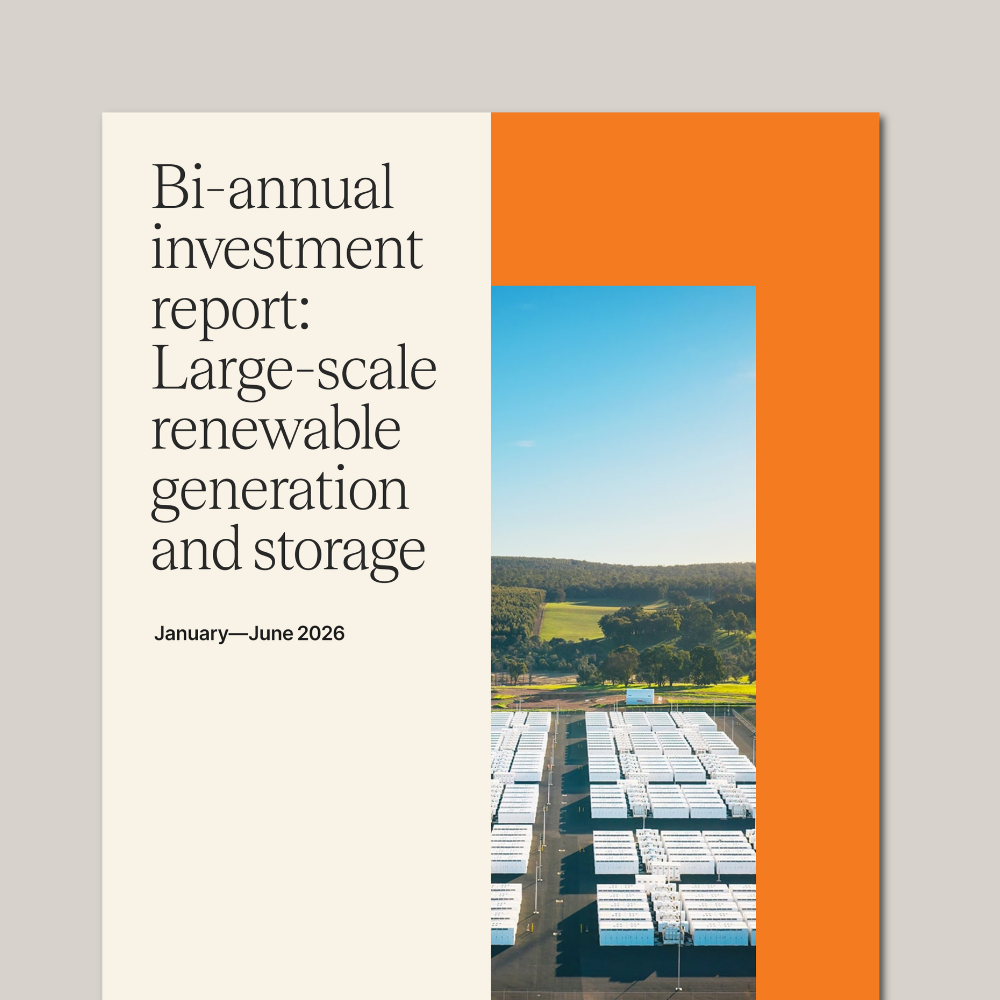
Bi-annual investment report: Large-scale renewable generation and storage, H1 2026

Clean energy investment surges, Australian energy security strengthens

Submission on AEMO's Market Visibility Framework consultation paper

Op-ed: If coal won’t quit, it should pay

Submission to NSW DCCEEW on changes to the Biodiversity Assessment Method