Powering the digital economy
Resolving competing energy demands between households and data centres
.png)
Australia can both power the digital economy and grow electricity supply
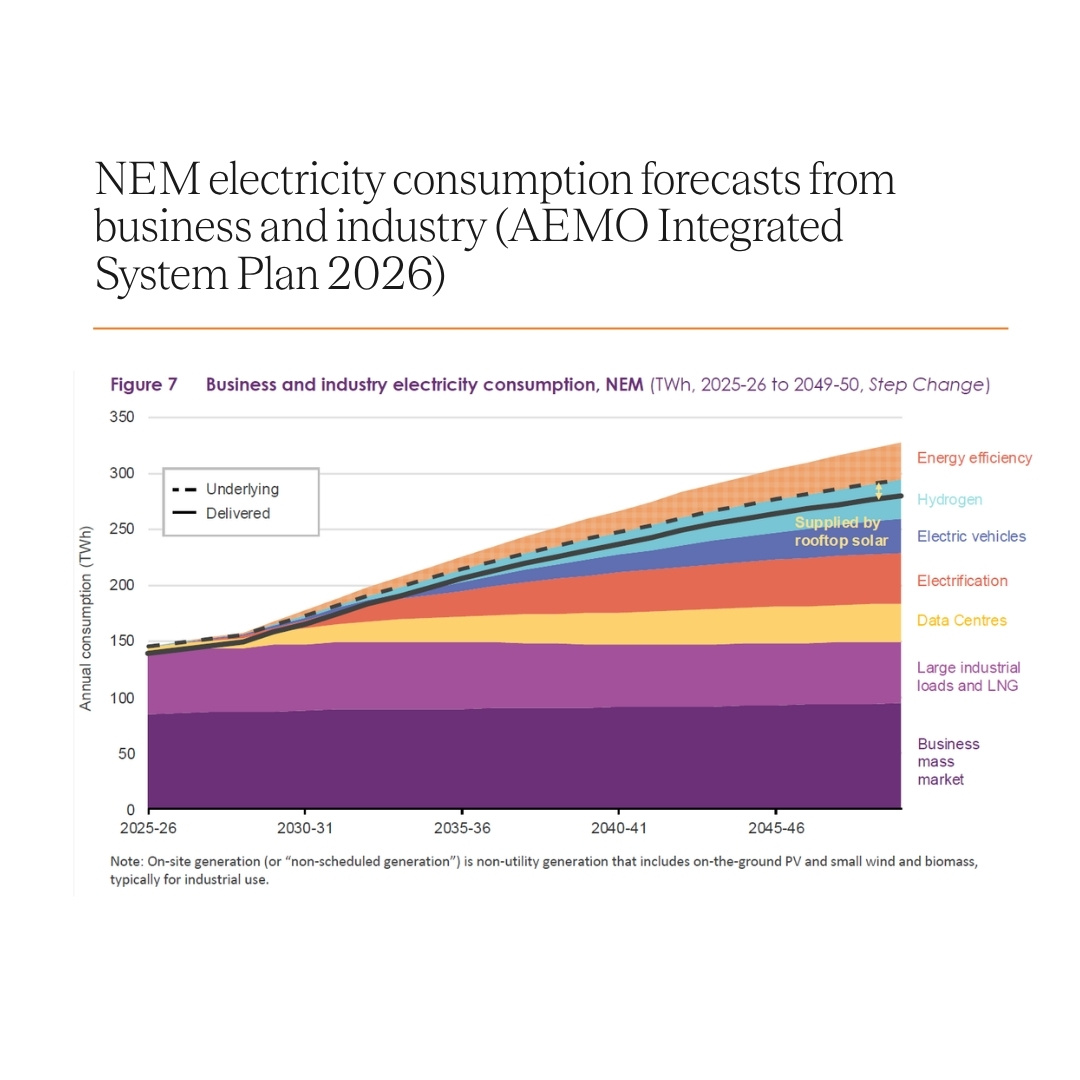
Australia's data centre sector is growing fast. This growth doesn’t have to compete with households and businesses for existing electricity. Instead, it can become one of the biggest drivers of new clean energy investment this country has seen.
Our new paper, Powering the digital economy, sets out a Flexible Contracting Framework for data centres that helps bring additional renewable generation into the market and meet the demand from data centres as they come online.
Discover how we get the framework right from the start.
How the Flexible Contracting Framework works
The Clean Energy Council’s Flexible Contracting Framework puts forward a method for data centres to match their grid consumption with new renewable generation, met through a combination of Additional Firmed Renewables (AFRs) and certificates (LGCs until 2030 and REGOs thereafter) sourced from new projects.
A commitment to investing in AFRs would provide a durable, bankable investment signal for newbuild generation capacity, while certificates offer shorter-term flexibility to cover residual variable demand and a means to cover the ‘timing gap’ between data centre and renewable energy build rates. Compliance would be structured as a ‘glide path’ rather than a fixed obligation from day one, reflecting the data centre facility's ramp-up profile, the delivery timelines of its contracted renewable projects, and its anticipated scaling trajectory.
How the New Renewable Generation Obligation plays out over the life of a data centre project
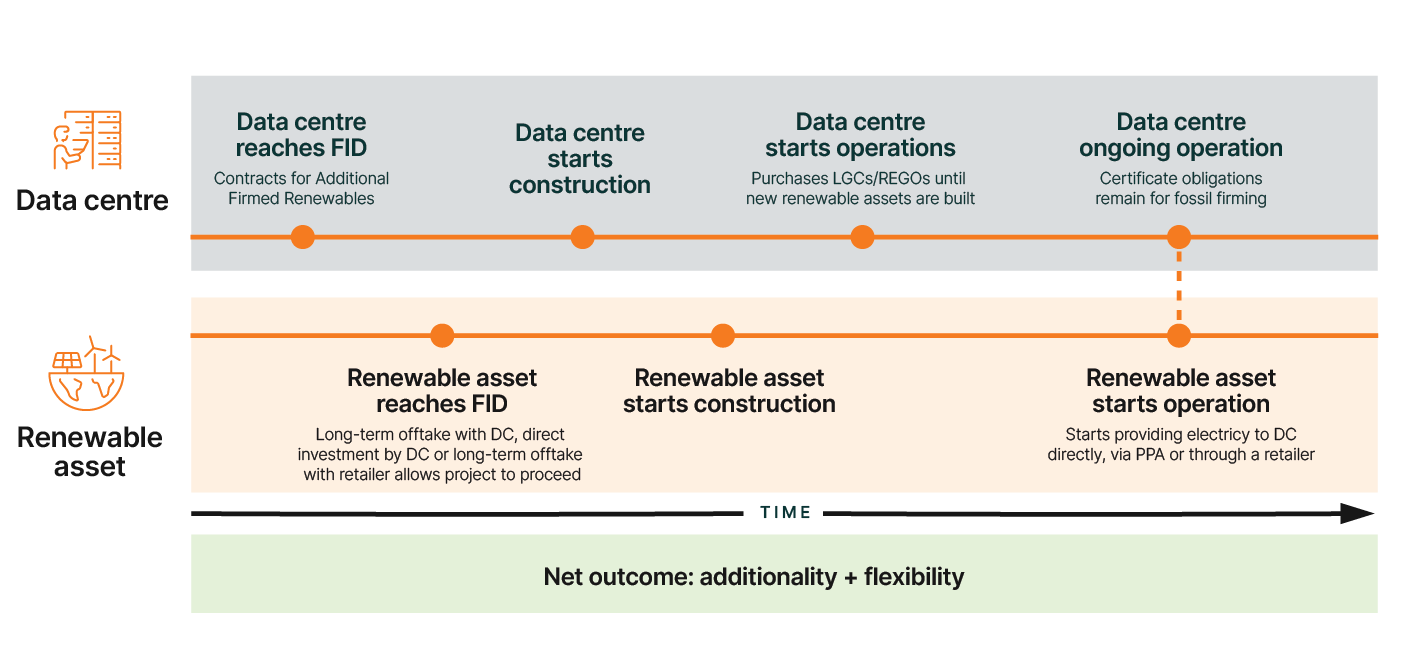
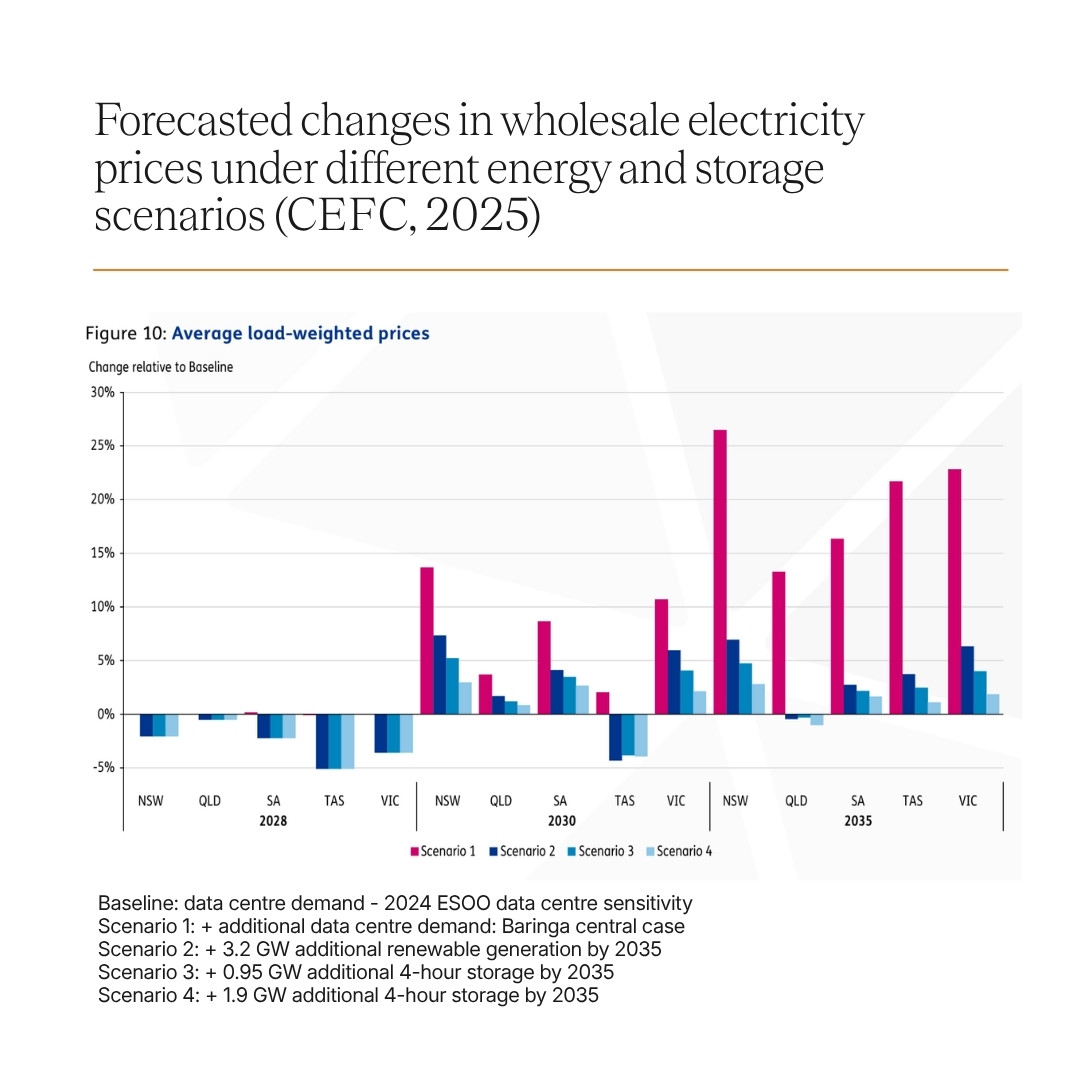
This approach ensures data centre growth drives new investment in electricity supply and keeps new demand matched with new supply taking pressure off power prices and avoids competing with existing electricity users.
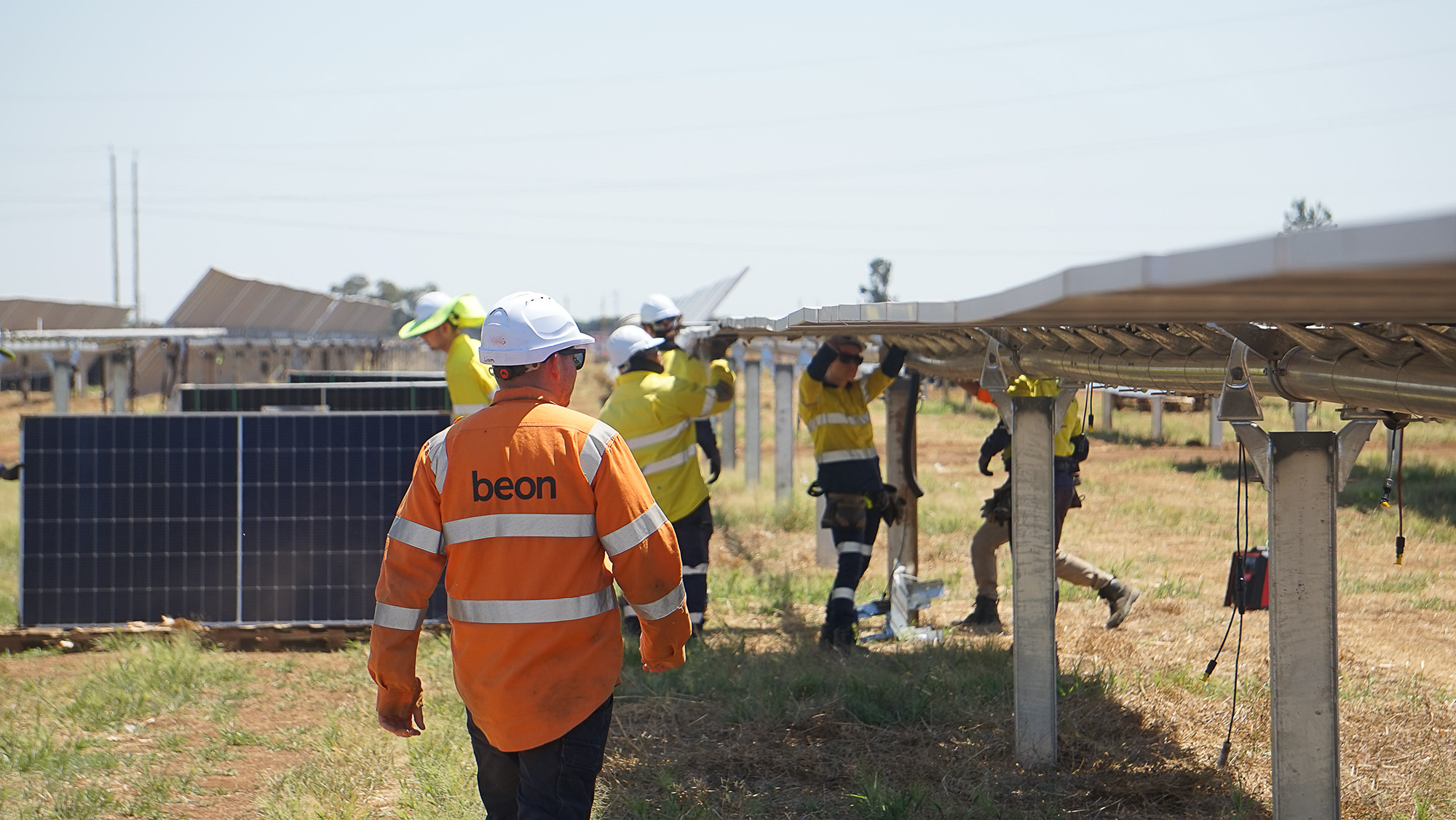
“Australia doesn’t have to choose between powering homes and powering the digital economy. We can do both, provided every major new electricity user helps secure the next generation of wind, solar and battery projects.”
Powering the digital economy
Resolving competing energy demands between households and data centres